
What about AI? Are AI Images a Viable Replacement for Photography and CGI in Amish Furniture Marketing?
A Breakdown on AI imagery from Karston Mullet at VIZTECH Furniture.
Can I use AI as a retailer? Yes you can, but you should understand how.
For Amish furniture builders and retailers, product imagery has always had its challenges. As a retailer you are looking for the best images to accurately tell the story to your customers on what sets amish furniture apart. When you have room settings that are sub par it pulls you, your store and all your furniture down to that quality level. On the other side when you have a a high quality room setting it elevates. It highlights what you are selling, quality craftsmanship and trust. For decades, the standard was traditional photography, produced and paid for by each of the individual builders and then the same pictures distributed to all of their dealers. While this has worked with the ability to picture all of the products on line a new challenge has come up. That challenge is that there is simply no hiding on the internet. Even if you as a store relabel every item if you are showing the exact same image as every other store its a simple search to find the exact same piece somewhere else. So how do you stand apart?
Starting in 2019, VIZTECH helped change this model. When we first introduced 3D modeling and CGI-generated imagery, it fundamentally reshaped how Amish furniture was presented. For the first time, builders could create images with cutout furniture, lifestyle scenes, and full-room settings without needing a physical piece. By working directly from shop drawings, CGI dramatically reduced the cost, labor, and logistical burden traditionally required for photography. It also unlocked flexibility allowing builders to show multiple wood species, stains, and configurations that would have been impractical or impossible to photograph physically. It also allowed us to set standards for best practices on displaying products effectively online. Adoption didn’t happen overnight; over time, the value became clear, and usage steadily compounded as builders became more familiar with the process.
Now, in 2026, we find ourselves at another crossroad with the emergence of AI-generated imagery. This shift hasn’t caught VIZTECH off guard. I have been closely tracking its development, testing its capabilities, and evaluating where it is truly viable and where it is not. That ongoing research is what led us to write this article. Our goal is to help you make informed, practical decisions by clearly outlining the current state of AI imagery and thoughtfully comparing it to CGI, so you can understand how each tool fits into your Amish furniture marketing strategy today. The question we’re seeking to answer is this:
Are AI images actually usable for Amish furniture marketing?
The answer is not simple, and anyone telling you otherwise hasn’t done the work.
- What AI images, CGI, and photography do well (or poorly)
- Where AI is already viable for Amish furniture
- Where AI is dangerous, legally and technically
- How intellectual property (IP) works in AI-generated imagery
- Why precision is the current hard limit of AI
- How builders and retailers can use these tools responsibly
Understanding the Three Image Categories
-
Traditional Photography
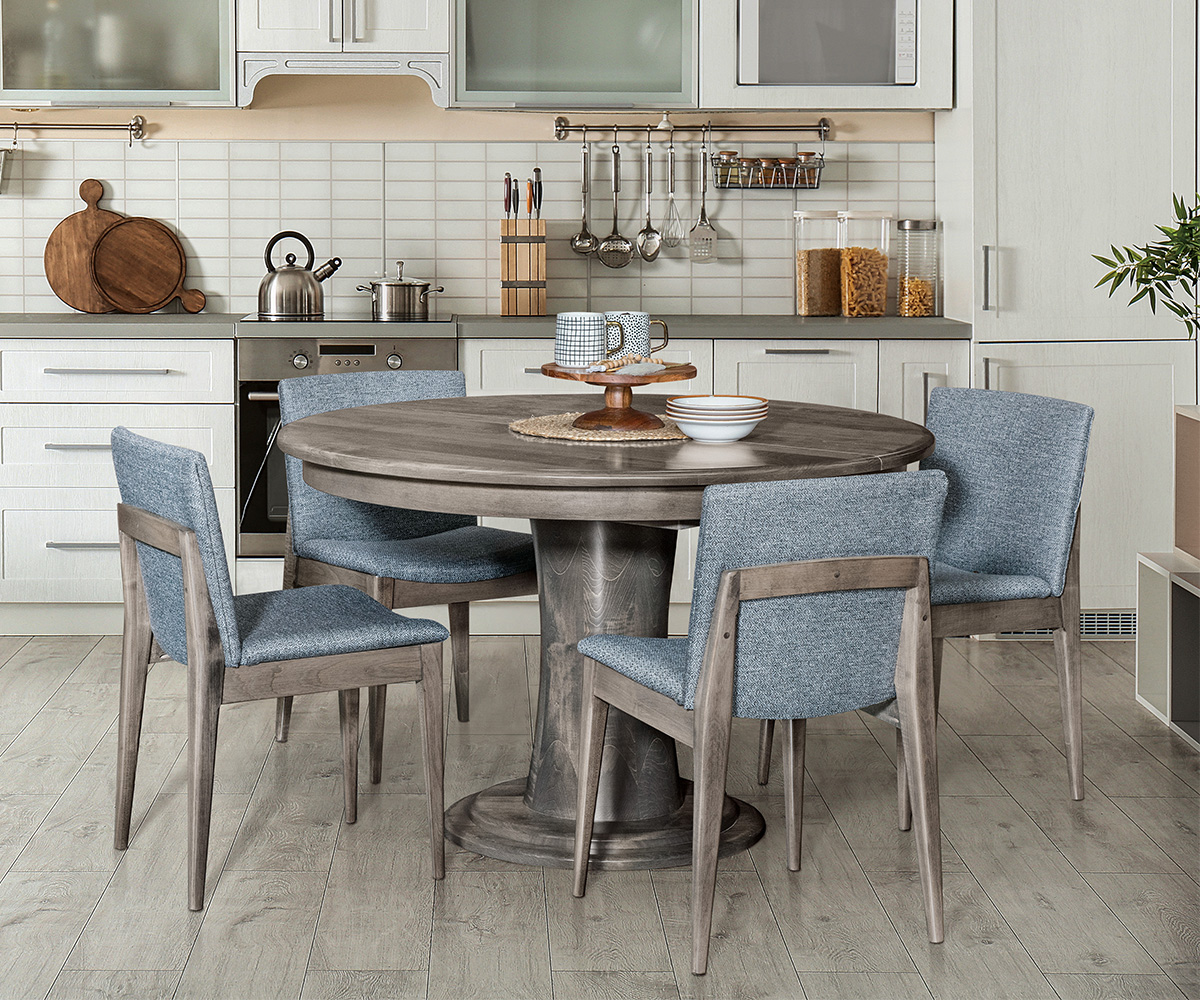
Photography is still the benchmark for truth.
Strengths
- Absolute dimensional accuracy
- Real finishes, grain, light interaction
- Legally clean when contracts are done correctly
Limitations
- Expensive and slow
- Limited room flexibility
- Difficult to scale across large product catalogs
- Depending on editing and light set ups it can be hard to get a good result.
-
CGI (Computer-Generated Imagery)
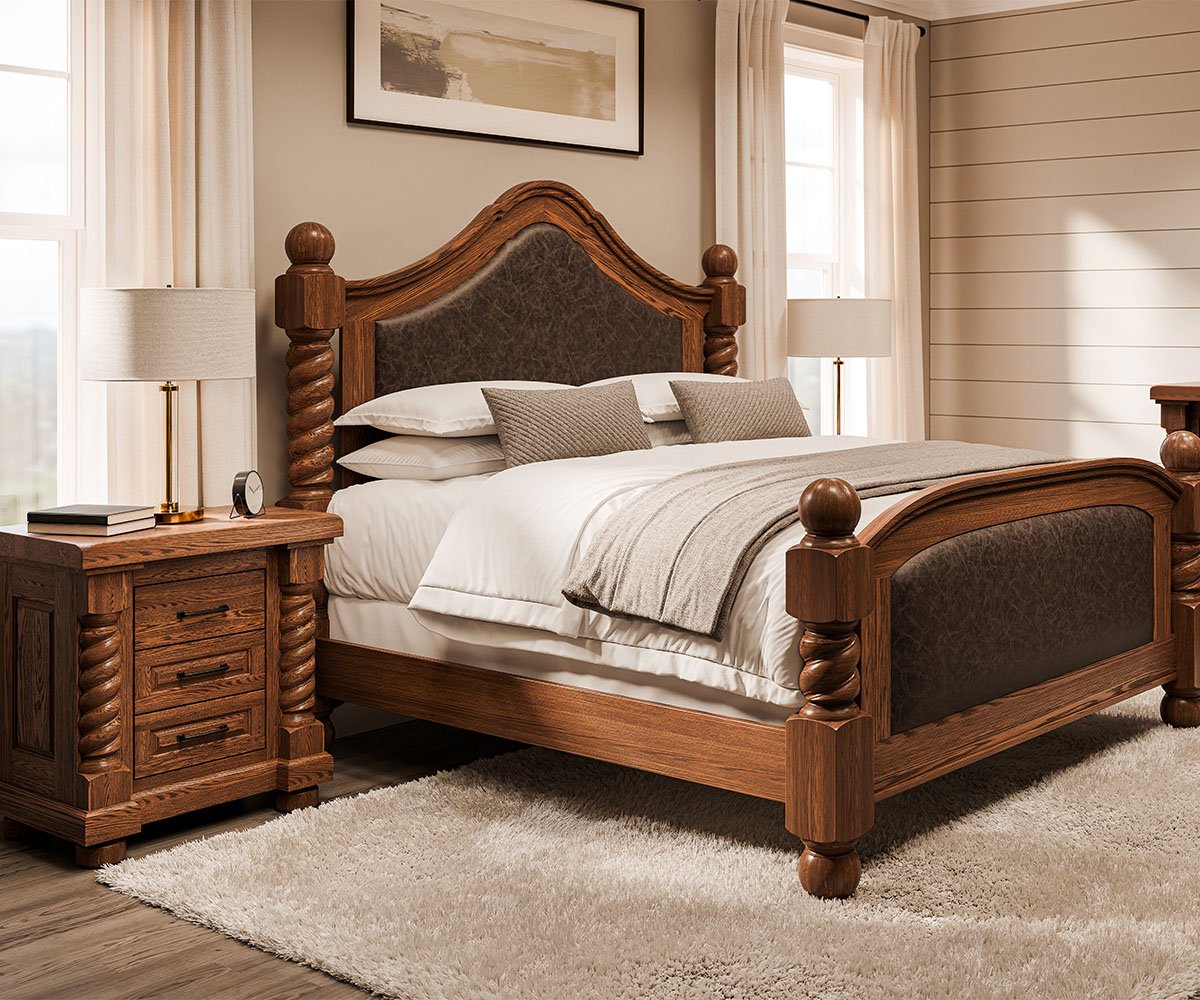
CGI is precision visualization.
Strengths
- Exact dimensions
- Perfect repeatability
- Full control over room settings
- Scalable across stains, woods, and configurations
Limitations
- Requires technical modeling expertise
- Higher upfront cost
- Without a solid system or experienced help, it often takes longer to work through problems and make improvements.
CGI is ideal when product accuracy is a non-negotiable, and the imagery will live for years.
-
AI-Generated Images
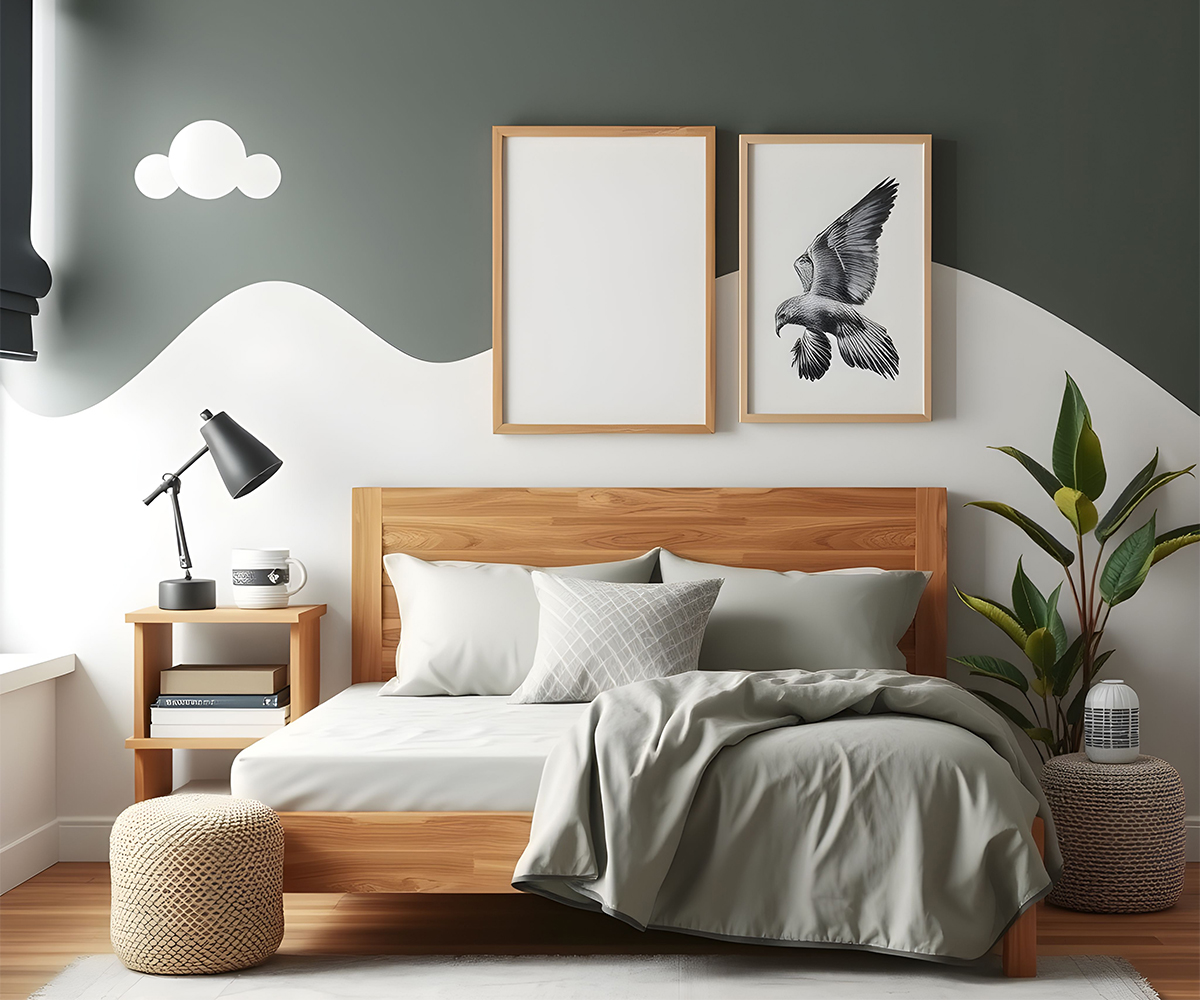
AI is conceptual acceleration, not precision rendering.
Using platforms like ChatGPT, Midjourney, and Sora, AI can now generate convincing room settings.
Strengths
- Quick or early-stage visualizations
- Mood, lifestyle, and brand storytelling
- Cost-effective for exploration
Limitations
- Unreliable dimensions
- Inconsistent object scaling
- Reinterpretation of instructions in attempts to be “helpful.”
- Legal ambiguity, if misused
- Must be watched closely
- Not editable, each new prompt is a new generation
AI is excellent at ideas and dangerous at pretending to be exact. The best way to use AI is a hybrid approach in which GGI models and AI room settings work together to create a well-designed room setting.
AI and Dimensions
This matters more in Amish furniture than almost any other category. AI image models do not think in measurements. They are simply large language models. They are very good at commands like:
- “Make the room feel larger.”
- “Add more dramatic ceiling height.”
- “Push the columns outward.”
They are very bad at interpreting instructions like:
- “This table is 72 inches and must not change.”
- “Scale the roof +50% while freezing all furniture geometry.”
This is not user error. This is the structural limitation of AI image models. Asking AI to behave like CAD (computer-aided design) software leads to bad outcomes because AI is not CAD software.
AI solves design direction. CGI solves design precision.
Where AI Images Are Viable for Amish Furniture
AI images are absolutely viable when used correctly and will only continue to improve. At VIZTECH we are working hard to proactive and not reactive to using AI.
Safe, Effective Use Cases
- Website header photos
- Conceptual room settings for marketing
- Mood boards for builders and retailers
- Early design validation before CGI or photography
- Brand storytelling and social content
AI works best when the goal is helping someone to imagine owning this furniture. I can already see the incredible use case of implementing a customer visualization tool that works with the customers home.
Where AI Becomes Dangerous
-
Product Misrepresentation
If an AI image changes:
- proportions
- joinery
- leg thickness
- overhangs
- hardware placement
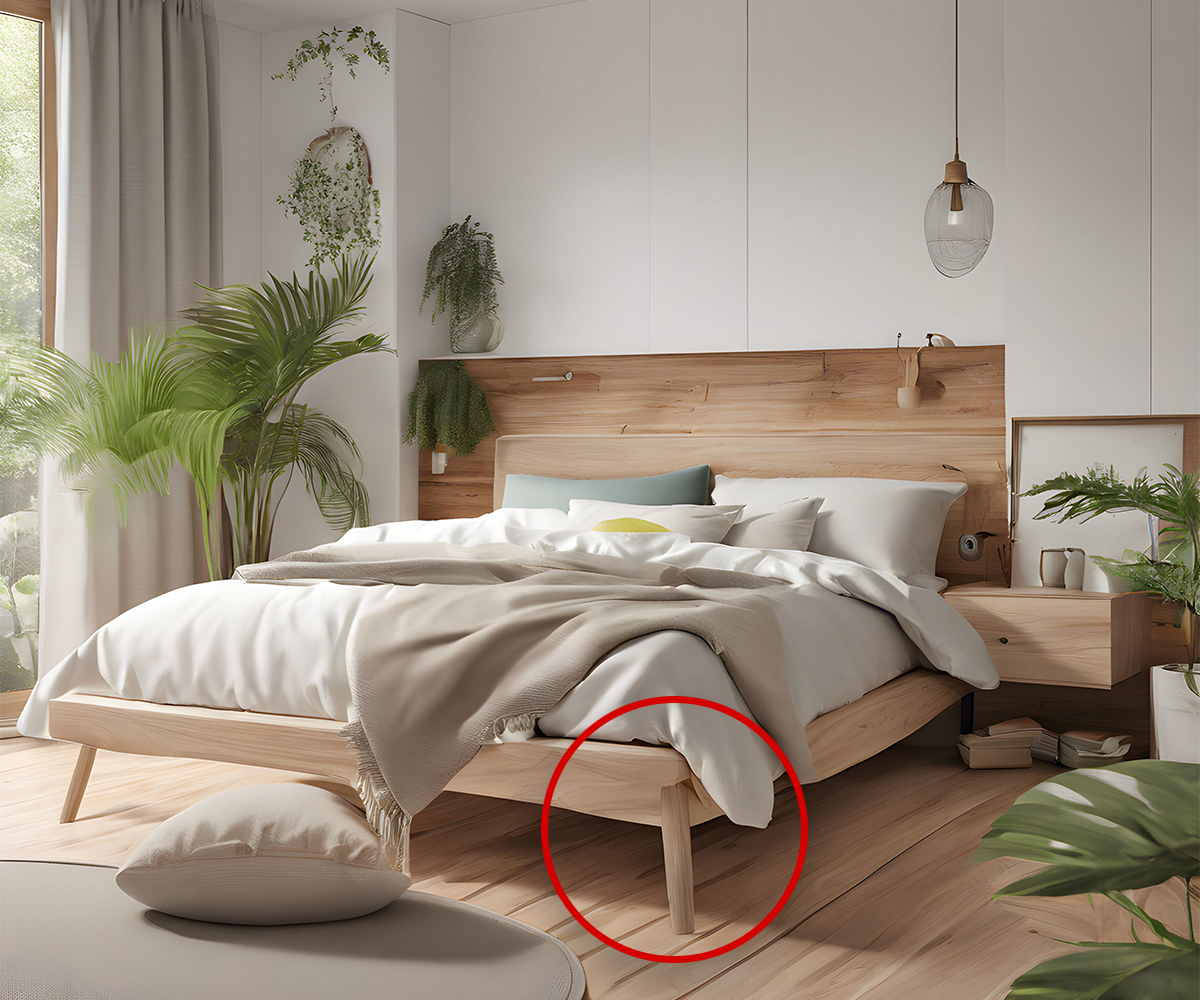
…and is presented as the real product, you have a problem. The saying is “When the image lies, the brand suffers”
-
Retailer Liability
Retailers using AI images without builder approval can risk:
- breach of agreement
- customer disputes
- brand damage
-
Intellectual Property (IP) Confusion
This is the biggest blind spot that we’ll discuss in the next section.
Who Owns AI-Generated Images of Amish Furniture?
- Builders own the Intellectual Property of their designs.
- AI platforms do not automatically grant you product rights.
- Training data does not equal permission to commercialize likeness.
- Spin-off images can still infringe on IP.
If a retailer:
- uploads a builder’s product photo
- generates AI variations
- uses them commercially
That retailer may not have the legal right to do so.
At VIZTECH we are very intentional on communication between buyer and builder on these rights. As a buyer you can create exclusive settings with permission from the builder to use their furniture. Ask us about our exclusive image asset program.
Why Creating Realistic Amish Furniture Room Settings with AI can be So Frustrating
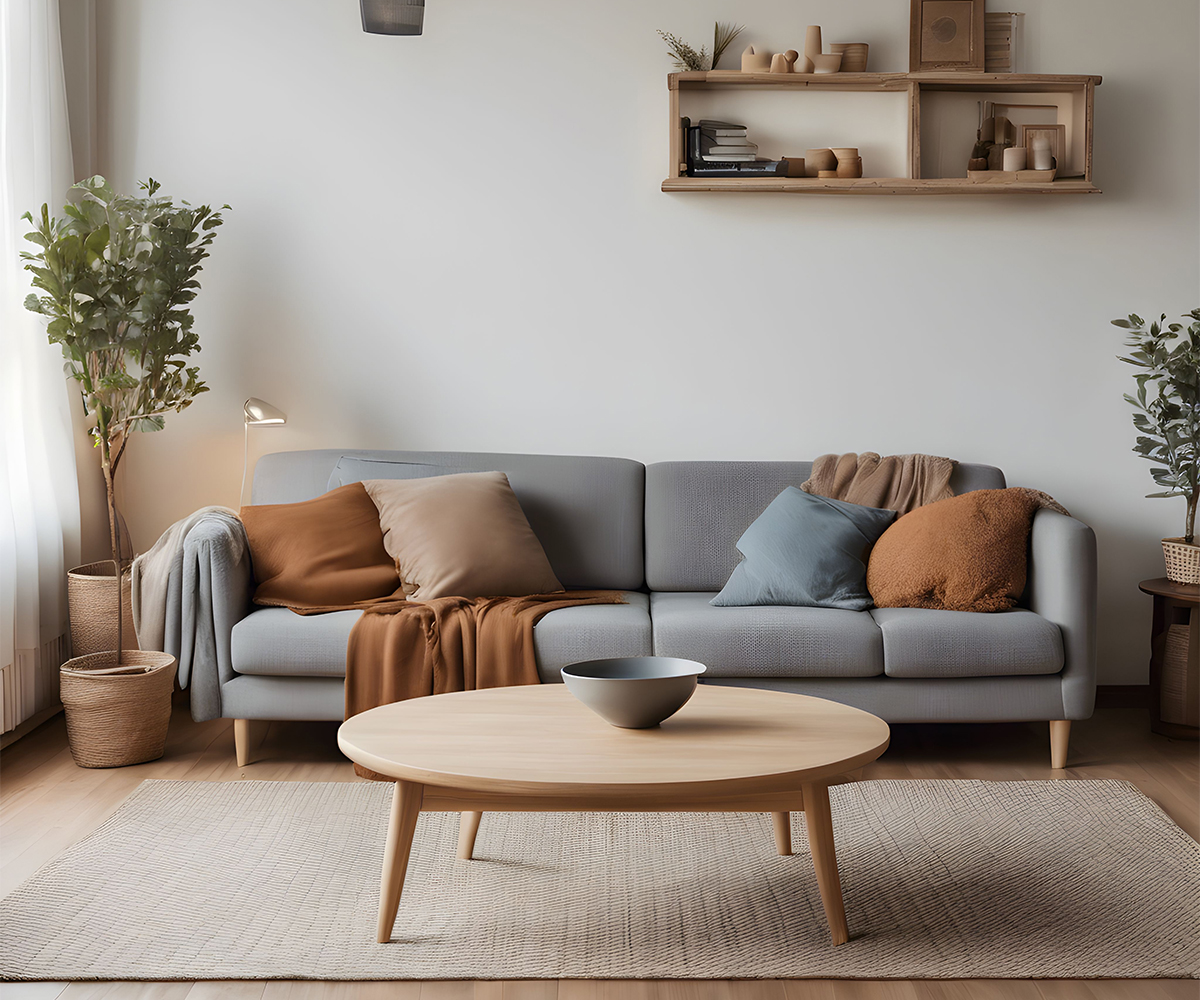
Chances are, you may have tried creating your own pictures and you have bumped into some of the AI limitations. The frustration people experience when trying to make “one small change” to an AI-generated Amish furniture room setting is not user error, weak prompting, or lack of patience. It is a consequence of how these models are built. AI is intended to be generative, not precise.
And the kind of work Amish furniture requires precision, proportion, repeatability sits right at AI’s weakest edge.
Limitation #1: AI Does Not Understand Fixed proportions
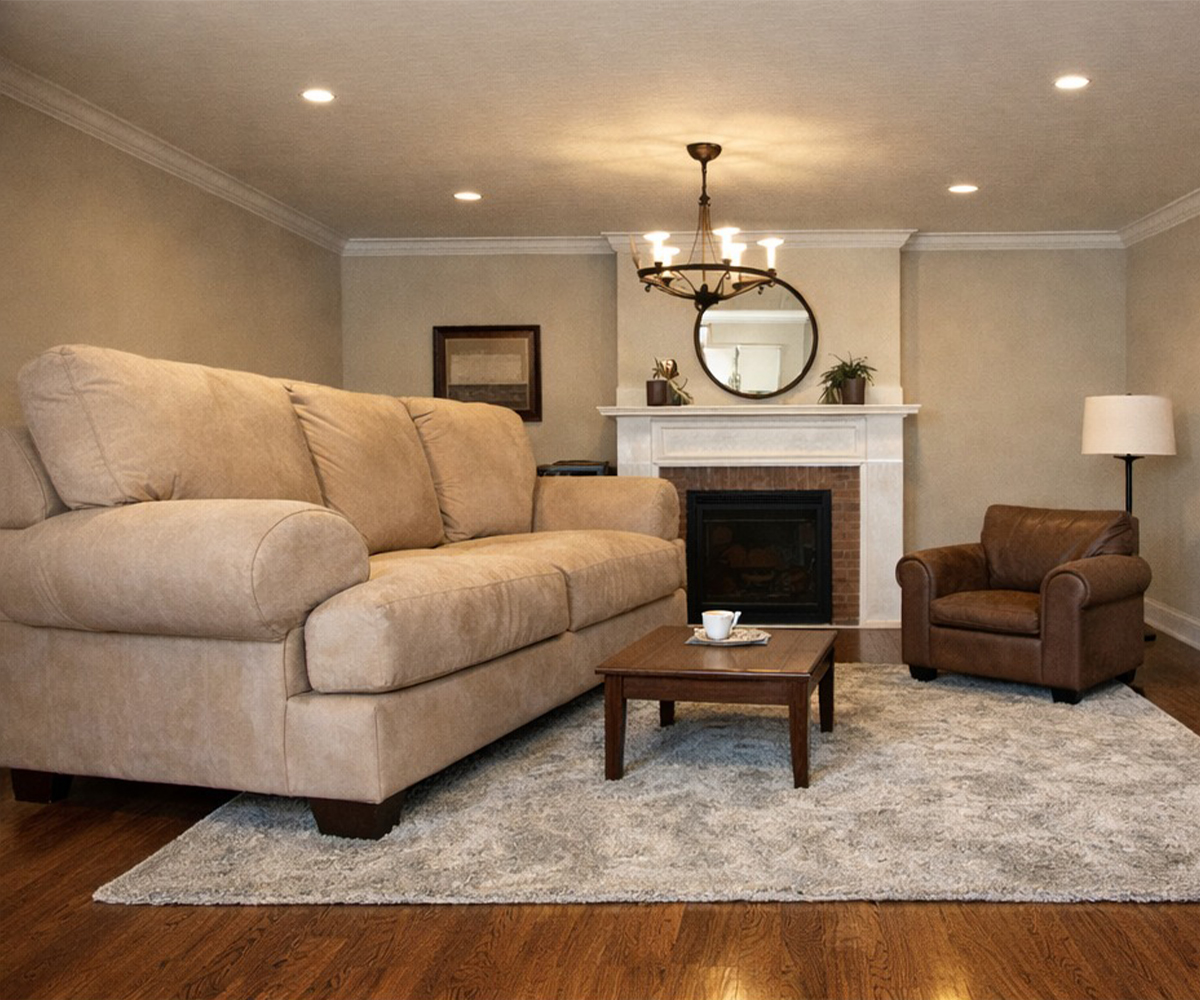
AI image models do not lock objects.
Even when explicitly instructed, they do not preserve:
- exact widths
- consistent depths
- true scale relationships
- absolute dimensions
Why this happens
AI models generate images probabilistically. Each image is a new interpretation, not a modification of an existing scene.
So when you say, “Keep the furniture exactly the same and just make the room larger.”
The model hears, “Re-imagine a similar scene where the room feels larger.”
That is a fundamental mismatch.
Result
- Furniture subtly stretches or shrinks.
- Overhangs change.
- Leg proportions drift.
- Joinery thickness mutates.
- Cabinets gain or lose inches.
In Amish furniture, those “subtle” changes are anything but subtle.
Limitation #2: AI cannot Freeze One Variable While Changing Another
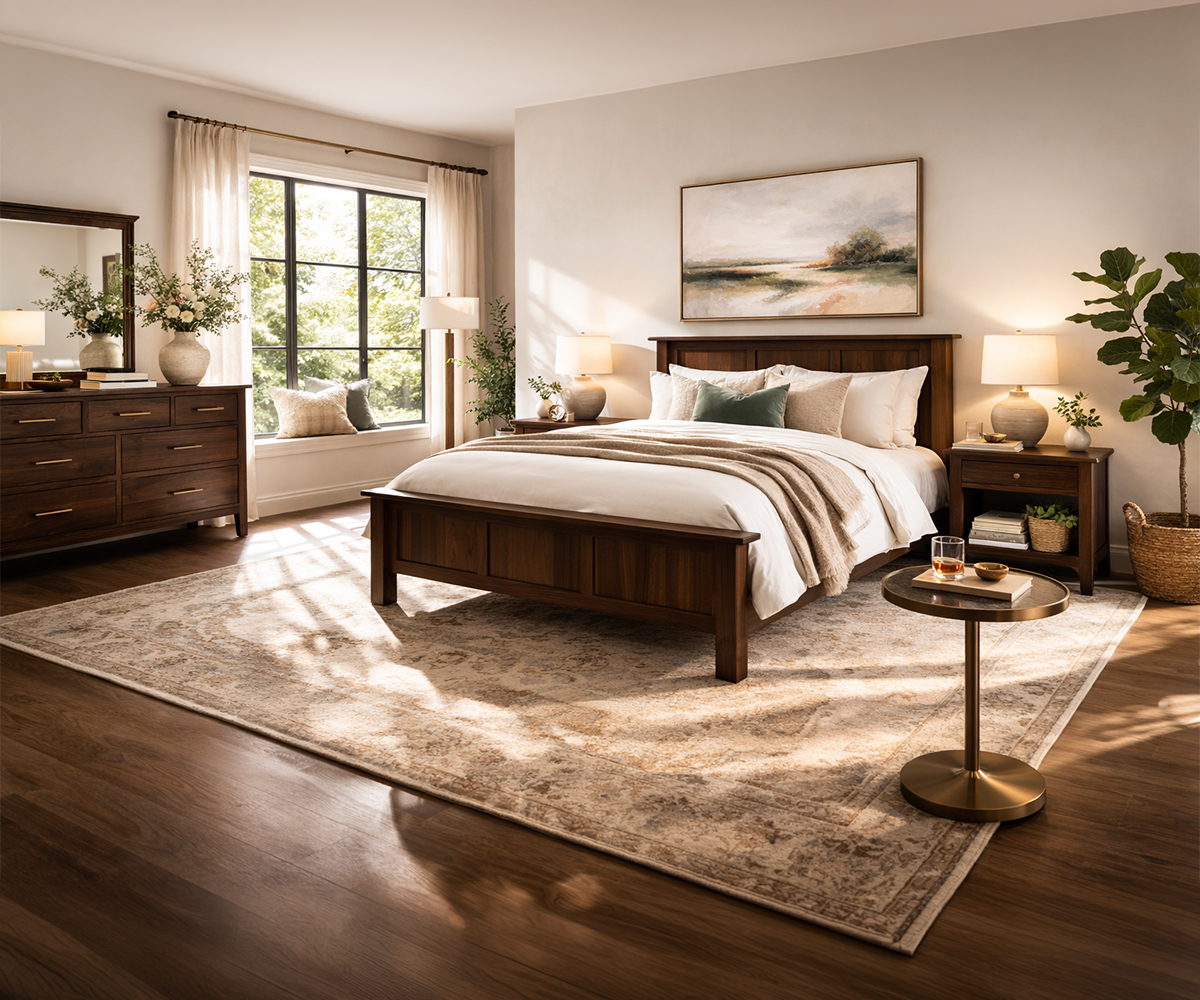
This second image was rendered from the first image after asking AI to ‘raise the ceiling’ and ‘extend the left wall’. (Feel free to count the many differences AI so helpfully included.)
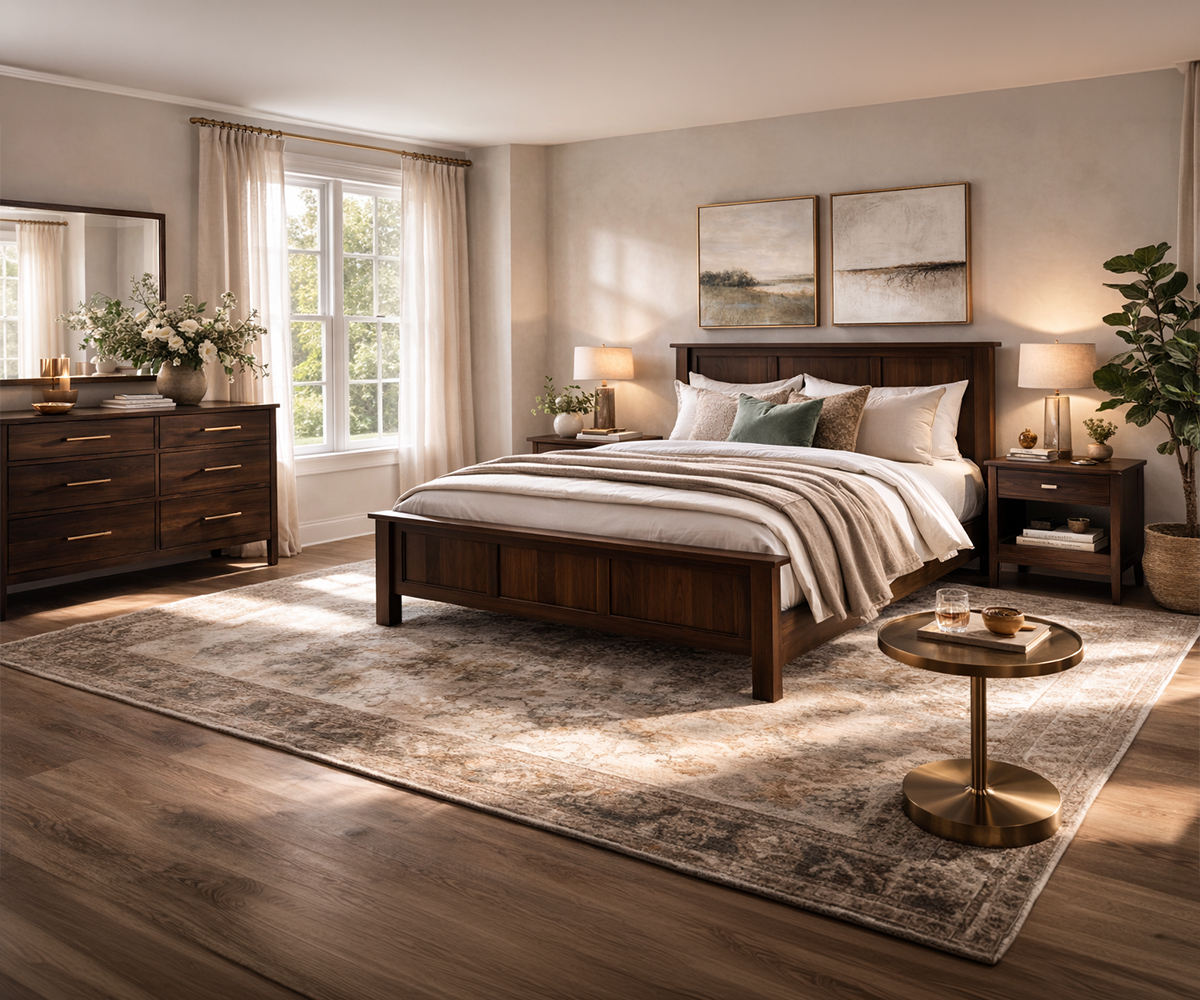
This is one of the most misunderstood failures. Humans can compartmentalize, as in, “This stays constant. That changes.” But AI doesn’t. For example, when you tell AI:
- “Increase ceiling height but keep furniture unchanged.”
- “Widen the pavilion roof but keep the cabinet run at 144 inches.”
- “Move the wall back without affecting proportions.”
You are asking AI to do constraint-based modeling and become like CAD, which it is not. What actually happens The model rebalances the entire image to maintain visual harmony rather than accuracy. It is “helping” just not in the way you need.
Limitation #3: Repetition Degrades Precision Instead of Improving It
Maybe you have been frustrated with rendering and re-rendering trying to get it just right? That is very common in using the AI for image assets. sometimes it actually feels like the little change you are adding, one tweak is actually make an overall worse setting.
In AI, repetition erodes the quality of the picture as it tries to do more. In CGI or photography, repeating the image gives more realism. Not so in each new regeneration.
Each new prompt:
- re-interprets the object
- introduces drift
- compounds errors
The more you try to “dial it in,” the further you often get from the original. That’s why, when you say, “Just one more tweak,” you end up saying, “Why does nothing match anymore?” It’s not a problem with AI; it’s the way it has always worked. But this will only get better.
Limitation #4: AI cannot Guarantee Product Truth
Without warning, AI will confidently generate:
- furniture that has never existed.
- proportions no Amish shop would build.
- joinery that looks plausible but is structurally wrong.
That makes AI extremely dangerous when:
- Images are used as product representations.
- Retailers assume visual accuracy.
- Customers expect what they see.
AI has no concept of liability, craft tradition, or customer trust. AI needs to be a sales tool not the salesman.
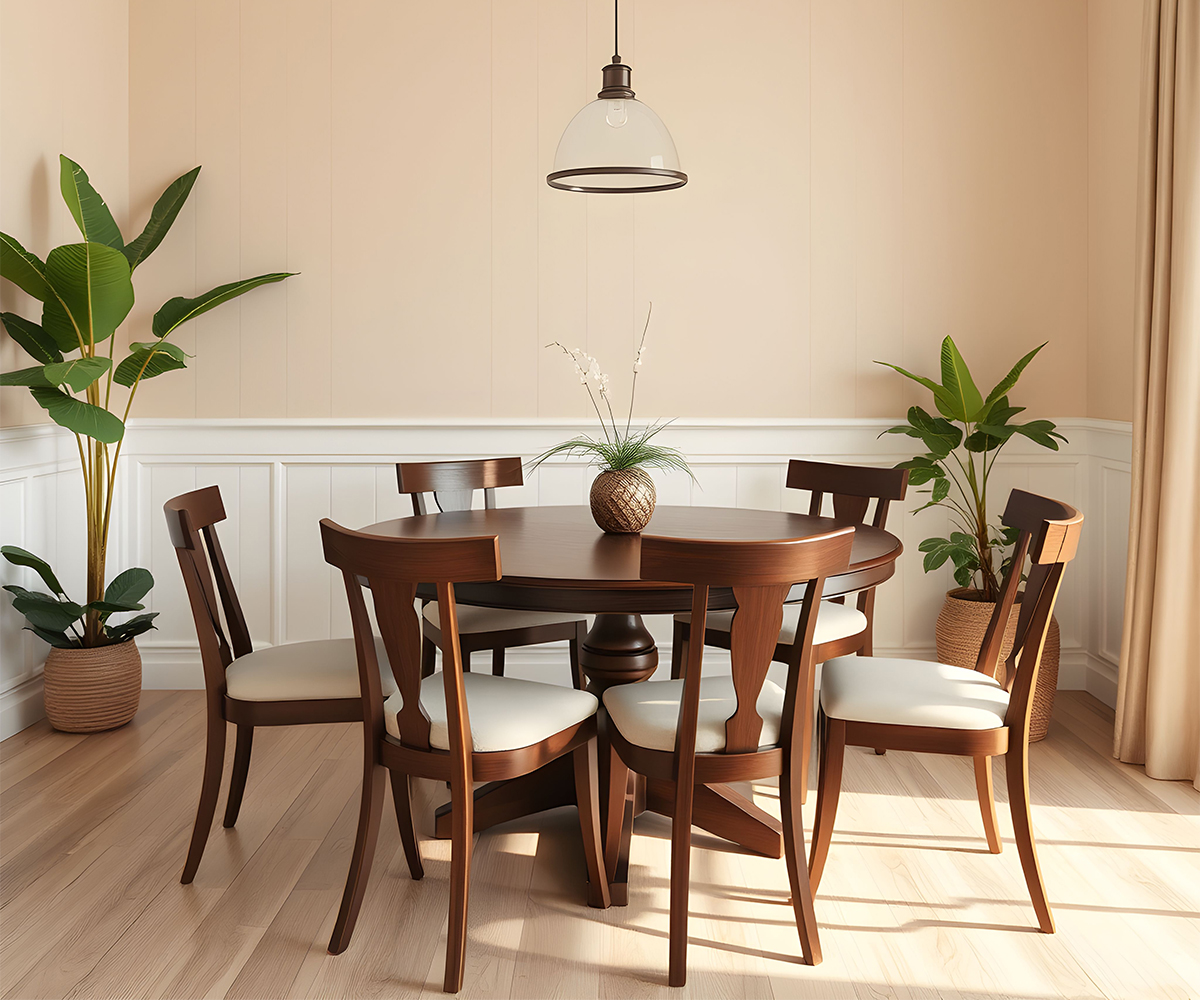
The above picture showcases some of the early struggles of ai imagery. It has improved drastically in 2026 alone. Trying to force AI to behave like CGI or photography will always feel frustrating because you are pushing it beyond its design.
I intentionally excluded that. It really could be its own article. The reason i am not addressing the real issue of wood/ stain accuracy, is it is so rapidly changing right now that even though it started with very poor representations, what we are doing to build out our own database of stains and woods for reference in our own platforms will totally change and resolve that problem. It’s only a matter of time.
There is also a skill component that should not be overlooked. The tools are more accessible, but the outcomes are not equal. The difference is not always the software. It is the understanding behind it. Knowing how to guide a system, how to work within its limitations, and how to consistently produce usable results takes experience. That is why some outputs feel generic while others feel intentional and believable.
There is also a skill component that should not be overlooked. The tools are more accessible, but the outcomes are not equal. The difference is not always the software. It is the understanding behind it. Knowing how to guide a system, how to work within its limitations, and how to consistently produce usable results takes experience. That is why some outputs feel generic while others feel intentional and believable.
I’m seeing changes and improvements happen at an incredible pace, and I’m now confident in my ability to use AI to create highly effective room settings and scenes. It’s an exciting time because the possibilities feel unlimited.
Conclusion
At a minimum, we need to acknowledge reality. AI is not coming. It is already here, and it is already changing how products are presented, marketed, and understood. The same way CGI reshaped furniture photography in 2020, AI is accelerating.
Our position is simple. We are not waiting to react to it. We are working to stay ahead of it.
For those of us focused on Amish furniture, the opportunity is significant. We are only at the front edge of what is possible. The ability to show a piece in multiple wood species, multiple stains, (if it can be done accurately and reliably) and multiple environments is becoming faster and more accessible. More importantly, it is becoming more personal. Customers are moving toward expecting to see furniture not just as a product, but as something placed in a space that feels like their own. Chances are you already have customer showing you photos they produced for their own visualization needs.
That level of visualization is where this is going. It will affect this industry. There is no question about that. I have barely mentioned the issues of matching woods and stains and what level a wood grain and stain is “good enough”.
There is also responsibility that comes with it. This work has to be done correctly. That means using accurate source data. It means respecting ownership. It means having clear permission from builders when their products are used. It also means recognizing that when a retailer invests in custom assets, there is a valid expectation around how those assets are used and who has access to them. You can create exclusive image assets just for your use. None of that goes away just because the tools are changing.
The most effective approach right now is not choosing between CGI and AI. It is combining them. Starting with CGI items gives a controlled foundation. Dimensions are correct. Proportions are correct. Construction details are correct. From there, AI can be used to place that product into quality environments
That combination matters. Without accuracy, the image loses trust. Without flexibility, the image loses usefulness.
This is where we are focused. Taking the experience built over years of producing CGI for this industry which is based in creativity and design and applying it in a way that incorporates these newer tools without sacrificing quality or control.
If you are looking at ways to differentiate your retail experience, this is one of the clearest paths available right now. It is more cost effective than it has ever been to create custom, exclusive assets that belong to your store and represent your offering in a distinct way.
If you want to explore what that looks like in your store, marketing, and website and your whole brand i would enjoy having that conversation with you. Feel free to reach out.
| KARSTON MULLET
Marketing Lead & Sales | VIZTECH Berlin, Ohio p: 330.893.3569 m: 330.763.4452 |